
General Gümrük Müş. Ltd.
Customs Brokerage for Europe–Türkiye Road Freight
Customs brokerage for our shipments is handled by General Gümrük Müş. Ltd., a company inside our own group rather than a subcontracted agent. That matters most in groupage: one incomplete file holds up an entire trailer, so the declaration is prepared by people who can see the shipment file — before the goods are loaded, not at the border.
Clearance is where the days go
On every corridor we measure, the gap between an ordinary transit and an extreme one is almost never explained by the road. The Italy lane averages 6.3 days and has a recorded case of 81. Greece averages 3.9 days and has recorded 21. No vehicle drove for eighty-one days.
Those extremes are customs and paperwork. Which makes clearance not a formality attached to transport, but the part of the operation with the most leverage over how long it takes.
Why groupage raises the stakes
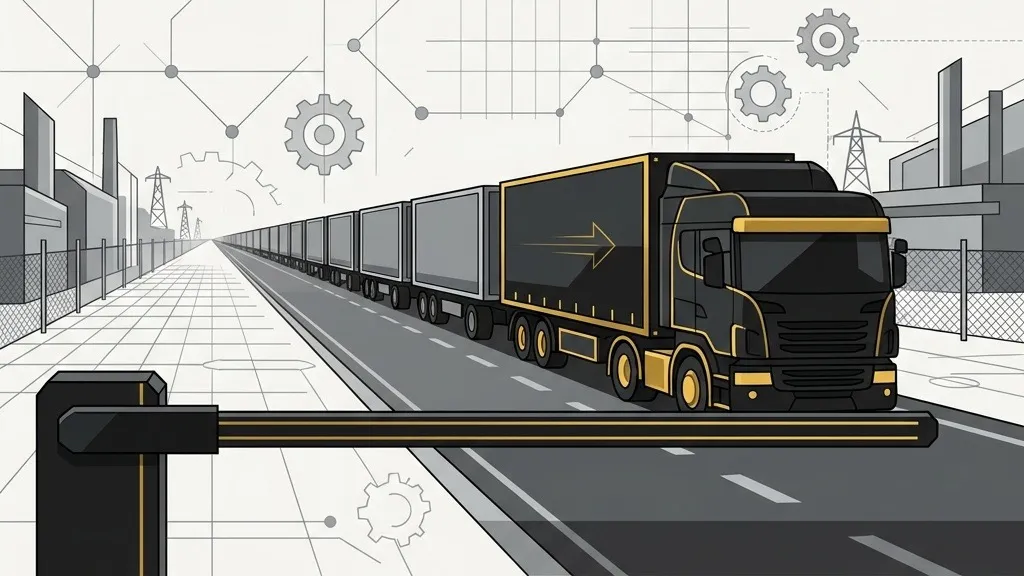
In a full load, an incomplete file delays one customer’s goods. In groupage it delays a trailer.
Your consignment travels alongside other shippers’ freight. If one document set is short a paper, the vehicle waits — and every consignment on it waits too. The cost of a missing certificate is not borne by the shipper who forgot it. It is spread across everyone who happened to be loaded that day.
That is the practical argument for checking documents before the consignment is loaded, and it is the reason customs sits inside our organisation rather than being bought in.
What the brokerage actually does
General Gümrük Müş. Ltd. is the customs brokerage in the General Logistic Group, working from the same shipment file as the transport side. In practice that covers:
- Commodity classification — matching goods to the correct code, which determines everything that follows. Our tariff catalogue holds 9,812 defined positions.
- Preference documents — A.TR for goods in free circulation inside the EU–Türkiye customs union; EUR.1 or an invoice declaration on lanes governed by a free trade agreement instead.
- Transit — TIR, the customs transit system used by more than 66 countries, which is what allows a sealed vehicle to cross borders without being cleared afresh at each one.
- Document review before loading — invoice, packing list, transport document, export declaration and whatever product-specific permits the commodity code brings with it.
The distinction that catches people out
A.TR and EUR.1 are not interchangeable, and the difference is not cosmetic.
A.TR certifies that goods are in free circulation within the EU–Türkiye customs union. It says nothing about where they were manufactured. EUR.1 certifies origin — that the goods qualify under the rules of a specific agreement.
Which one applies follows from the departure country. Most of our lanes run inside the customs union, so A.TR is the document. The UK and Switzerland do not, so origin is what has to be proven there. Since 8 July 2024 the EU also accepts A.TR certificates issued electronically with a QR code, without a wet-ink signature.
The detail is set out in the customs guide.
One organisation, one file
Transport through General Kargo Ul. Taş. Ltd., customs through General Gümrük Müş. Ltd., cargo insurance through Servis Sigorta Ar. Hiz. Ltd. — three companies, one group, one shipment file.
Send us the consignment details and we will confirm what your goods need before anything is loaded.
Frequently asked questions
Do I need a separate customs agent?
Not for shipments we carry. General Gümrük Müş. Ltd. is the customs brokerage inside our group, so the declaration and the transport run through one organisation. You send one set of details and deal with one point of contact.
Why does in-house clearance actually make a difference?
Because of what groupage does to a document error. Your consignment shares a trailer with others, so a file that is missing a paper does not hold up one shipment — it holds up the vehicle. When the declaration is prepared by someone who can see the shipment file, the gap is found before loading rather than at the frontier.
Which document does my shipment need — A.TR or EUR.1?
It depends on where it comes from. Inside the EU–Türkiye customs union, goods in free circulation travel with an A.TR movement certificate. From countries outside that union — the United Kingdom and Switzerland among the lanes we run — preference depends on origin instead, proven with an EUR.1 certificate or an invoice declaration. Getting this wrong is one of the more expensive mistakes on this route.
What does commodity classification have to do with delays?
Everything downstream of it. The commodity code determines which documents and permits apply. An incorrect code pulls the wrong document set with it, and the error usually surfaces at the border rather than at the desk. Our tariff catalogue holds 9,812 defined positions, and matching your goods to the right one is where document problems are either avoided or created.
When do you check the documents?
Before loading. That is the whole point of the arrangement. Checking at the border means discovering the problem when the vehicle is already there and other consignments are waiting behind yours.
Can you advise on my specific goods?
Yes — that is what the brokerage is for. What we publish on this site is general information; the procedure that applies to a particular consignment depends on the goods, their commodity code and the transaction. Send us the details and we will confirm what is required.
Tell us about your consignment
Collection address, what the goods are, weight and dimensions. We will come back with the terminal, the expected transit and what the paperwork needs.