

Customs document · A.TR
A.TR Movement Certificate: What It Proves and When It Does Not
The A.TR movement certificate proves that goods are in free circulation within the EU–Türkiye customs union, which is what grants them preferential treatment. It is not a proof of origin, and it does not cover everything: agricultural products, coal and steel fall outside the customs union and need an origin document instead. Since 8 July 2024 the EU accepts A.TR certificates issued electronically with a QR code.
One document, one job
The A.TR movement certificate does exactly one thing: it establishes that goods are in free circulation within the EU–Türkiye customs union. That status is what entitles them to move without customs duties between the two sides.
Free circulation means one of two things. Either the goods were produced within the customs union, or they were imported from a third country and already cleared for free circulation on one side of it. A machine manufactured in Japan, imported into Italy and cleared there, is in free circulation. It can travel to Türkiye on an A.TR.
What it does not prove
A.TR is not a certificate of origin, and treating it as one is the single most common misunderstanding on this route.
Origin asks where the goods were made. Free circulation asks whether they have already been cleared. Those are different questions with different answers, and different documents:
| A.TR | EUR.1 / invoice declaration | |
|---|---|---|
| Proves | Free circulation under the customs union | Originating status under an agreement |
| Question answered | Has duty already been settled here? | Where do these goods come from? |
| Applies to | Industrial and processed agricultural goods | Goods under origin-based agreements |
The Turkish Ministry of Trade puts it in one line: A.TR indicates that the good is in free circulation, not proof of its origin, whereas the EUR.1 movement certificate demonstrates origin.
The exclusions most people miss
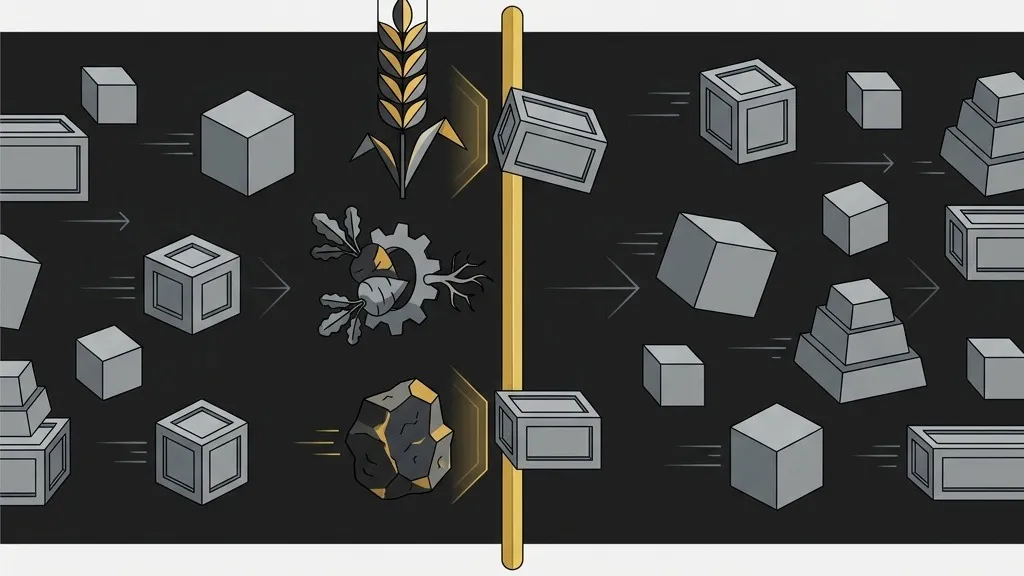
The customs union does not cover everything traded between the EU and Türkiye. According to the European Commission, its scope is limited to products other than agricultural products as defined in Annex I of the Treaty, and coal and steel products. Those categories are subject only to preferential agreements based on their originating status.
In plain terms:
- Industrial goods and processed agricultural products — inside the customs union, A.TR applies.
- Agricultural products — outside it. Preference depends on origin, so an EUR.1 certificate or invoice declaration is the document.
- Coal and steel — outside it too, covered by a separate agreement between Türkiye and the former ECSC dating from 1996. Again origin-based.
If you ship food, raw agricultural commodities or steel, an A.TR is the wrong paper. This is not an edge case — it is a whole category of goods, and the error surfaces at the border rather than at the desk.
What changed in July 2024
Since 8 July 2024, EU member states accept A.TR certificates that the Turkish authorities issue electronically, with a QR code and without a wet-ink signature.
The practical consequence is easy to underrate. Until then, a paper original had to travel with the consignment; if it did not arrive, the goods waited. For groupage traffic — where one trailer carries many consignments and therefore many document sets — that was a recurring source of delay, and it has been removed.
Where A.TR does not apply at all
Not every European lane runs inside the customs union. Two of the corridors we operate do not:
- The United Kingdom left the customs union with Brexit. Trade runs under the UK–Türkiye free trade agreement, and preference depends on origin.
- Switzerland was never in it. The EFTA–Türkiye agreement applies, again on an origin basis.
On both lanes, asking for an A.TR is asking for a document that cannot be issued.
Everywhere else — Italy, Germany, Spain, France, the Netherlands, Belgium, Poland, Czechia, Austria, Greece and Portugal — the customs union governs, subject to the product exclusions above.
Why the paperwork decides the transit time
Across our own records the pattern is consistent: the gap between an ordinary transit and an extreme one is a document gap, not a distance one. The Greek lane averages 3.9 days and has recorded 21; Italy averages 6.3 and has recorded 81. No vehicle drove for eighty-one days.
That is the argument for getting the certificate right before the goods are loaded. In groupage, the cost of a missing paper is not borne by the consignment that lacks it — it is borne by every consignment on the same trailer.
Which document your specific goods need follows from their commodity code, and that is what our customs brokerage confirms before loading. This page is general information and does not replace binding advice for a particular shipment.
Sources
External figures on this page come from the publicly available sources below. They are not our own measurements.
- 01European Commission — Türkiye: Customs Unions and preferential arrangements. Scope limited to products other than agricultural products and coal and steel; A.TR establishes the status of goods in free circulation2026
- 02European Commission — New A.TR movement certificate rules for EU–Türkiye Customs Cooperation (electronic issuance with QR code from 8 July 2024)5 July 2024
- 03European Commission, Access2Markets — EU–Türkiye Customs Union: coal and steel covered by a separate ECSC–Türkiye agreement2026
- 04Republic of Türkiye, Ministry of Trade — Origin of goods: A.TR indicates free circulation, EUR.1 demonstrates origin2026
Updated: 27 July 2026
Frequently asked questions
What does an A.TR certificate actually prove?
That the goods are in free circulation within the EU–Türkiye customs union — either wholly produced there, or imported from a third country and already cleared into free circulation on one side of it. That status is what grants preferential treatment. It says nothing about where the goods were manufactured.
Is A.TR a certificate of origin?
No, and the confusion is expensive. A.TR certifies customs status; EUR.1 certifies origin. Goods made in China but cleared into free circulation in Germany can travel to Türkiye on an A.TR. The same goods would not qualify for an origin-based preference anywhere.
Which goods are not covered by the customs union?
Agricultural products as defined in Annex I of the Treaty, and coal and steel products. Both are outside the scope of the customs union and are traded under separate preferential agreements based on origin — so for those goods A.TR is the wrong document and an EUR.1 certificate or invoice declaration applies instead.
What changed for A.TR in July 2024?
Since 8 July 2024, EU member states accept A.TR movement certificates issued electronically by the Turkish authorities, bearing a QR code and without a wet-ink signature. In practice that removes a step that used to depend on a paper original travelling with the consignment.
Who issues the certificate?
It is issued by the exporter and endorsed by the customs authorities of the exporting country. Its issuance is regulated by Decision 1/2006 of the EC–Turkey Customs Cooperation Committee. In practice the customs broker prepares it as part of the export file.
What happens if the certificate is missing or wrong?
The consignment loses its preferential treatment, which means duty becomes payable, and in the meantime the goods wait. In groupage that waiting is not confined to one shipment — the trailer waits with it. Which is why the document is checked before loading rather than at the border.
Let's talk about your Europe–Türkiye shipment
Send us the shipment details and we will confirm the collection terminal and the expected departure.