
Incoterms 2020 · DPU
DPU (Delivered at Place Unloaded): Costs, Risk and Unloading
Under DPU, the seller delivers the goods unloaded from the arriving vehicle at the named place of destination, and bears all risk until that unloading is complete. The buyer is responsible for import customs clearance and all duties in the destination country; the seller handles export clearance and all transport and unloading costs to the point of delivery. DPU is the only rule in Incoterms 2020 that places a mandatory unloading obligation on the seller — under DAP, its closest equivalent, the buyer unloads. The rule entered force on 1 January 2020 as the replacement for the 2010 rule DAT (Delivered at Terminal), with the scope broadened to any named place, not only a transport terminal.
The rule in brief
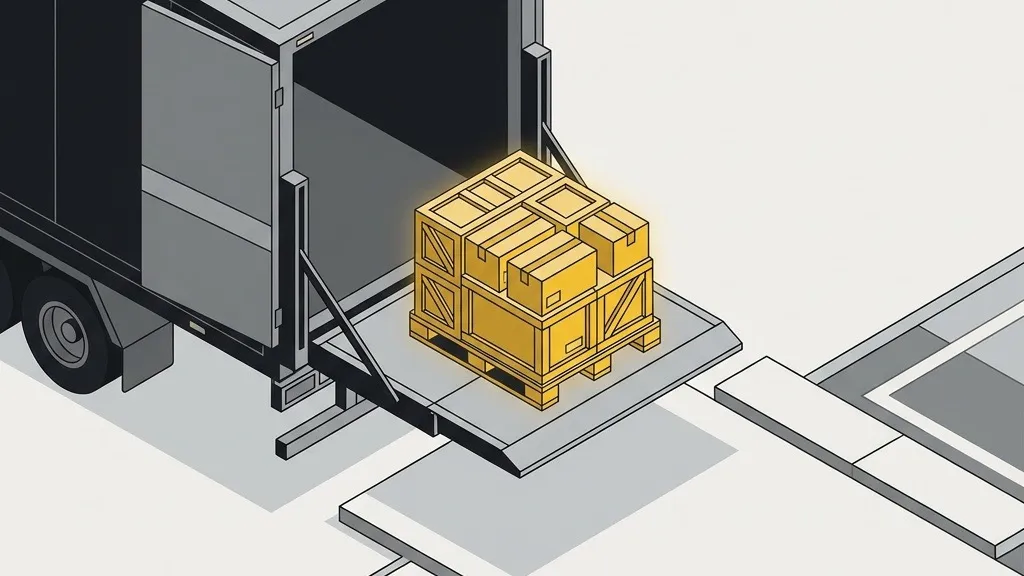
Under DPU (Delivered at Place Unloaded), the seller is responsible for the goods from origin to the moment they are physically placed on the ground — unloaded — at the named destination. Cost and risk both travel with the seller to that same point. No other rule in Incoterms 2020 places the unloading obligation on the seller: under DAP the goods are delivered on the arriving vehicle and the buyer unloads; under DDP the same applies. DPU is the exception, and the unloading is not merely administrative — it carries legal and financial weight throughout the operation, not only during transit.
What the seller pays, and where risk lies
The seller bears all costs from origin to completed unloading: export packaging, the export customs declaration and any official charges at departure, the main carriage to the destination country, delivery to the named place, and the unloading itself. Once the goods are off the vehicle, costs pass to the buyer — import duties, import VAT, and any onward transport or storage from that point.
Risk transfers at the same moment as costs: when unloading is complete. This is unlike CPT or CIP, where cost travels to the destination but risk passes earlier, at the point of handover to the first carrier. Under DPU, no such gap exists. Cost and risk are aligned at a single event.
The unloading operation itself
The most common misunderstanding about DPU is that the seller’s risk ends when the vehicle arrives at the named place. It does not. The seller carries risk throughout the unloading operation — a crane failure, a dropped pallet, or a forklift accident during unloading falls on the seller, not the buyer. Only when the goods are fully off the vehicle does risk transfer.
This is the defining distinction from DAP. Under DAP, the seller delivers on the arriving vehicle, at the buyer’s disposal, before unloading begins. Under DPU, the goods must leave the vehicle. That difference in scope is also a difference in access: the seller needs practical and legal access to unload at the agreed point, which is not always guaranteed at a customs-controlled site where import formalities may restrict entry.
Customs responsibilities
Export formalities fall entirely on the seller: the export licence where required, the export declaration, and any export duties or official charges at origin. Import formalities fall entirely on the buyer: the import licence where applicable, the import declaration, and all duties and VAT in the destination country. The seller has no obligation to assist with or contribute to import clearance.
This division creates a timing trap that arises more often than it should. If the buyer has not completed import clearance before the vehicle arrives at a bonded warehouse or customs-controlled area, the seller may be physically unable to reach the unloading point. The goods remain on the vehicle, delivery cannot be completed, and storage or demurrage costs begin to accrue — costs the seller may have to absorb while having no control over the delay. Any DPU contract should address who bears those costs if the buyer’s clearance is not complete on arrival.
DPU in groupage
In groupage freight, one vehicle carries many consignments simultaneously, and the unloading point is typically a terminal or distribution warehouse rather than a buyer’s own premises. Under DPU, the named place is where the seller’s obligation ends, and that place must be precise: a terminal address or unloading bay, not a city or country name alone. Naming only a city leaves both parties uncertain about access rights and who is responsible for arranging unloading.
On the Italy–Türkiye corridor, the groupage structure is straightforward. The seller’s goods travel consolidated with others on the same vehicle, and the trailer arrives at a terminal in Türkiye. For a DPU sale on this lane, the named place is that terminal — with the address and the bay — not Istanbul or Türkiye as a whole. The seller arranges unloading there; the buyer clears import and takes delivery from the ground. Across the corridors we operate, the principle is the same. Specificity in the named place is not optional.
One consideration specific to EU–Türkiye trade flows: DDP, which places import duties and formalities on the seller, is demanding in Türkiye because a foreign seller must be administratively present to act as importer. DPU avoids that entirely by leaving import clearance to the Turkish buyer, who holds the relevant registrations and is on the ground. Our customs brokerage handles the Turkish import side for buyers who want structured assistance rather than managing the declaration independently.
Insurance
DPU imposes no insurance obligation on either party. There is no equivalent of the CIP requirement, which since Incoterms 2020 demands cover at the Institute Cargo Clauses (A) level — the all-risks minimum. Under DPU, whether the goods travel insured depends entirely on what the parties agree. The seller would be prudent to insure from origin through to completed unloading, since that mirrors the full extent of their risk period; the buyer should arrange cover from the moment unloading is complete. Without a contractual requirement, however, neither is obliged to, and a gap in cover during the unloading operation itself is a real risk. The cargo insurance page sets out where standard carrier liability — capped by the CMR convention at 8.33 SDR per kilogram of gross weight — falls short of the invoice value for light, high-value consignments.
From DAT to DPU
DPU entered Incoterms 2020 as the replacement for the 2010 rule DAT (Delivered at Terminal). The underlying obligation is comparable — the seller unloads at the named place — but the 2010 version restricted the delivery point to a transport terminal: a port, airport, or road or rail terminal. DPU removes that restriction entirely. The named place can now be any location: a warehouse, factory premises, or construction site. For road groupage, where delivery to premises rather than a terminal is common, this matters in practice.
Any contract still referencing DAT should be reviewed and updated. The core obligation is not changed, but the scope is broader, and a named terminal under the 2010 rule may not carry the same meaning as the same named place under the 2020 rule.
A note on this page
The above reflects how DPU is defined in Incoterms 2020 as published by the International Chamber of Commerce. The right choice of Incoterms rule for any specific commercial relationship depends on the goods, the counterparty’s capabilities, the practicalities of access at the named delivery point, and the applicable law of the contract. Nothing on this page constitutes legal or commercial advice for a particular transaction.
Sources
External figures on this page come from the publicly available sources below. They are not our own measurements.
- 01ICC, Incoterms® 2020 — authoritative publication (paid; entered into force 1 January 2020)2020
- 02ICC, Incoterms® rules — overview page2026
- 03U.S. International Trade Administration — Know Your Incoterms (confirms DPU replaces DAT; unloading obligation on seller)2026
Updated: 27 July 2026
Frequently asked questions
What is the difference between DPU and DAP?
Under DAP the seller delivers on the arriving vehicle and the buyer unloads. Under DPU the seller must unload before delivery is complete, which means the seller carries risk through the unloading operation — a cost and practical obligation that does not exist under DAP. Using the wrong code means one party unexpectedly bears unloading responsibility and cost without having agreed to it.
Who is responsible for import customs clearance under DPU?
The buyer handles all import formalities in the destination country: the import licence where applicable, the import declaration, and all duties and VAT. The seller has no obligation to assist with or contribute to import clearance. The seller's only obligation at the border is the export declaration at origin.
Why does the seller carry risk through the unloading operation, not just during transit?
Because DPU defines the point of delivery as the moment the goods are unloaded from the arriving vehicle, not the moment the vehicle arrives. Until unloading is complete, the seller's obligations continue. A damaged pallet during unloading is the seller's problem under DPU; under DAP, the same accident would fall on the buyer.
Does DPU require either party to take out insurance?
No. DPU imposes no insurance obligation on either party — unlike CIP, which since Incoterms 2020 requires cover at Institute Cargo Clauses (A) level. Each party is prudent to insure their own risk period: the seller from origin to completed unloading, the buyer from that point forward. Without a contractual requirement, neither is obliged to, and gaps in cover are a real risk.
Is DPU a new rule, and what did it replace?
DPU entered force on 1 January 2020 as part of Incoterms 2020, replacing the 2010 rule DAT (Delivered at Terminal). The 2010 rule restricted the named place to a transport terminal — port, airport, rail or road terminal. DPU extends this to any named place, including warehouses and factory premises. The obligation to unload is unchanged; the scope of where delivery can occur is broader.
What happens if the buyer has not cleared the goods for import when the vehicle arrives?
If the delivery point is a customs-controlled area or bonded warehouse, the seller may be unable to access it to unload — and therefore cannot complete delivery — while import clearance remains outstanding. Storage or waiting costs begin to accrue and they fall on the seller who cannot finish delivery. The DPU contract should address who bears those costs if clearance is not complete on arrival.
Let's talk about your Europe–Türkiye shipment
Send us the shipment details and we will confirm the collection terminal and the expected departure.