
Definitions · Road freight
What Is Groupage? Definition, How It Works, and When to Use It
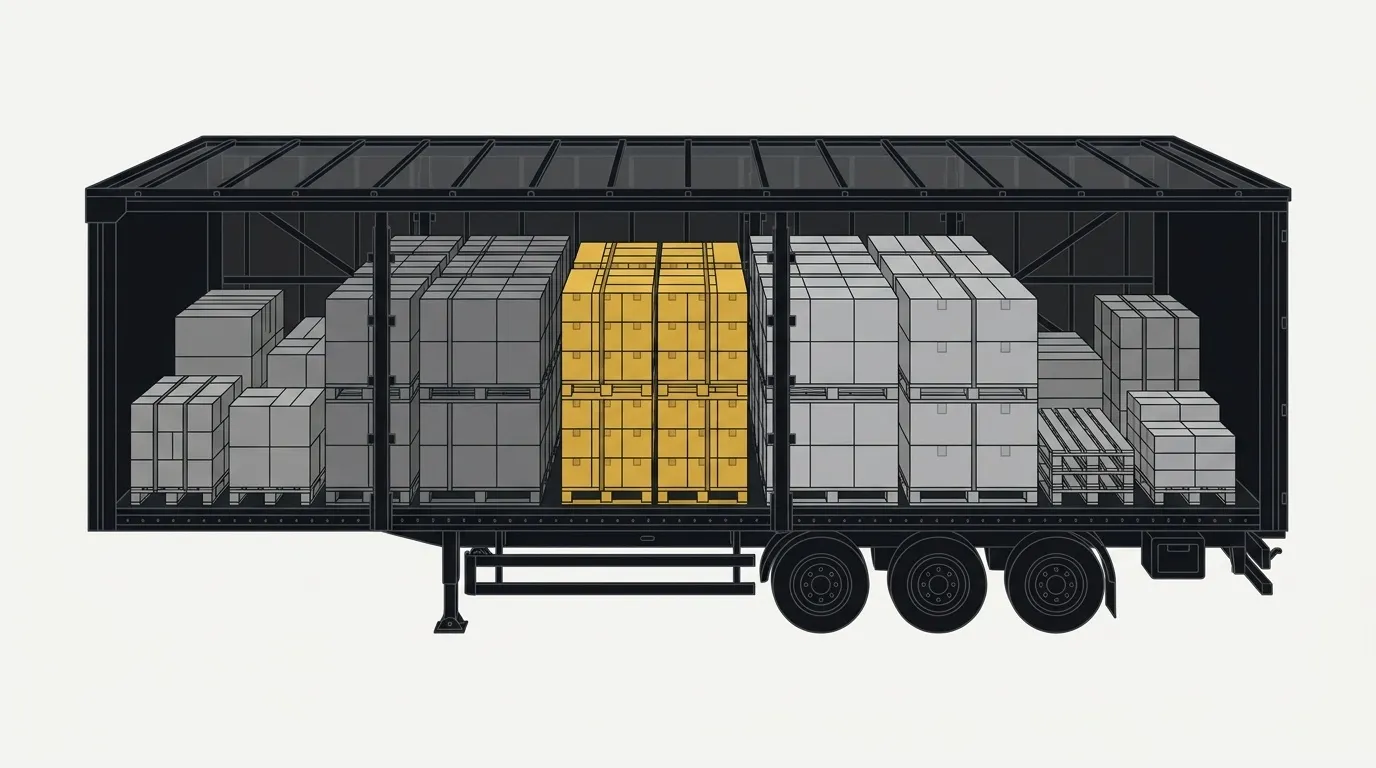
Groupage is the practice of combining cargo from several independent shippers onto a single trailer so that each pays only for the space their goods occupy. In European road freight the term refers to part-load road transport; in sea freight the equivalent is LCL, which uses a shipping container rather than a trailer. We operate road groupage services — we do not offer sea container consolidation.
Groupage, in one sentence
Groupage is the practice of combining cargo from several independent shippers onto a single trailer so that each pays only for the space and weight their goods occupy.
What a groupage shipment is
A groupage shipment is any individual consignment that travels as part of a consolidated load. The goods have their own documentation — their own CMR consignment note, their own customs declaration — but they share the vehicle with other shippers’ cargo throughout the main haul. From the shipper’s point of view it is a single transaction with a single price; from the carrier’s point of view it is one of several on the same trailer.
The alternative names follow the region. In continental Europe the term is groupage (from the French). In North America the same service is called LTL, for less-than-truckload. In British logistics both terms appear, with groupage more common in freight forwarding and LTL more common in road haulage documentation. Whichever name a provider uses, the underlying service is the same.
How it works in practice
A groupage consignment follows four stages.
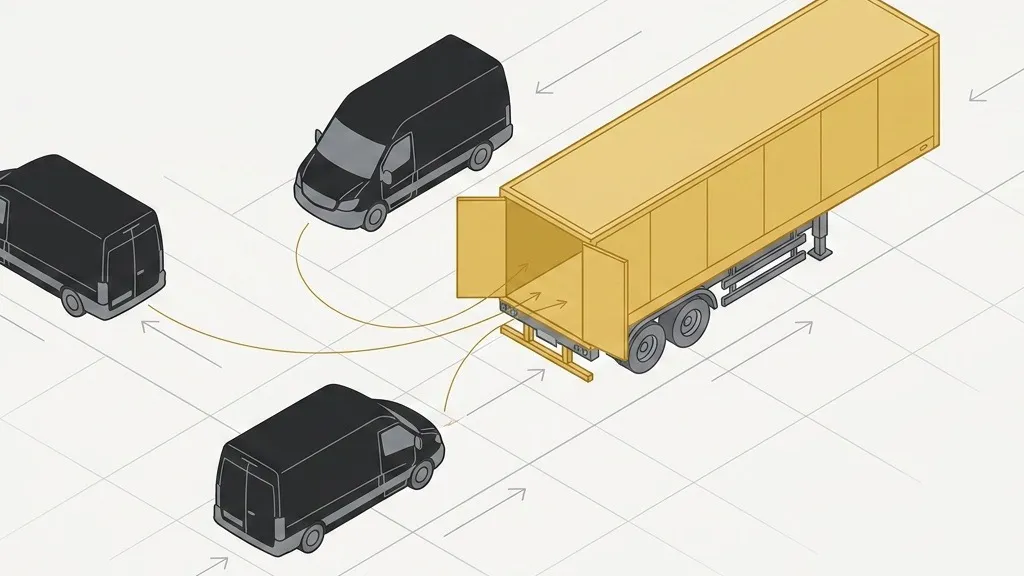
Collection. The carrier or its agent collects the goods from the shipper’s premises and moves them to a consolidation terminal. On the Italy–Türkiye corridor, which accounts for the majority of our measured volume, we operate five terminals — in Milano, Vicenza, Torino, Bologna and Firenze. A consignment collected in the Veneto arrives at Vicenza; one collected in Tuscany goes to Firenze. The domestic leg from collection point to terminal is part of the service.
Consolidation. At the terminal the consignment joins others bound for the same destination. The trailer is loaded until it reaches capacity — either the floor runs out or the payload limit is reached — and the documentation set for every consignment on it is checked before departure. Where any file is incomplete, it is resolved here rather than at the border.
Main haul. The consolidated trailer runs as a single vehicle from origin country to destination. On road freight between Europe and Türkiye this means a transit crossing at the Turkish border, where a single vehicle carries the customs paperwork for every consignment aboard. Transit time is influenced by how quickly the trailer fills at consolidation, by border conditions, and by the length of the domestic delivery leg at destination.
Distribution. At destination the trailer is unloaded and the consignments are separated. Each is delivered to its final address on its own domestic leg.
Groupage, LCL, LTL, and FTL: what each term means
This is the distinction that most glossaries handle poorly, because the terms cross modes of transport and continents.
Groupage in European road freight means sharing a trailer with other shippers. The vehicle is a curtain-side semi-trailer. Space is measured in loading metres — one metre of trailer floor across its full width — and priced on the basis of what you occupy rather than what the vehicle weighs.
LCL stands for Less than Container Load. It is a sea-freight term: the container is a shipping container, not a road trailer. LCL and groupage describe the same commercial idea — shared space, shared cost — but the mode of transport, the documentation, and the legal framework are entirely different. A sea LCL shipment travels under a bill of lading and passes through a container freight station at each port; a road groupage shipment travels under a CMR consignment note and passes through a road terminal. Using LCL terminology on a road shipment produces the wrong document set. We operate road groupage services; we do not offer sea container consolidation.
LTL (Less than Truckload) is the North American equivalent of European road groupage. The service is the same; the billing conventions and industry terminology differ. If you are sourcing road freight in Europe and a provider quotes you LTL, they almost certainly mean groupage.
FTL (Full Truckload) is the whole vehicle. One shipper fills the trailer. There is no consolidation, no waiting for other cargo, and the vehicle can depart when the load is ready. The Incoterms choice reads differently under FTL and groupage, because a full load can name a factory gate as the collection point in a way that a consolidation service often cannot.
How to say it
Groupage is French in origin — the word entered English logistics vocabulary through the Channel trade. It is pronounced GROOP-ahj, with the stress on the first syllable and the second syllable following the French -age ending.
When groupage is the right choice — and when it is not
Groupage suits consignments that are too large for parcel or express delivery and too small to fill a dedicated vehicle. You pay for what you occupy rather than for the whole trailer, which makes the service efficient across a wide range of cargo sizes — from a single pallet to several loading metres.
The honest limit is volume. Once a consignment begins to fill a substantial share of a trailer, a full load is worth comparing. There is no consolidation delay on a full load, the vehicle does not wait for other cargo, and departure can follow immediately when the goods are ready. Whether the threshold falls in your favour depends on the lane, the cargo density, and the timing pressure. For most European shippers to Türkiye and most Turkish importers from Europe, the cargo profile fits comfortably within the range where groupage is the straightforward answer.
The other variable is urgency. Consolidation means waiting for the vehicle to fill, and on a thinner lane that wait can stretch. If a consignment must depart on a fixed day regardless of load factor, a dedicated vehicle is the only reliable option.
What groupage means for transit time
The first consequence of shared loading is that departure is contingent on the trailer filling. This is why lane averages do not simply track distance.
Our records across 10,551 measured shipments on fourteen corridors show this plainly. Poland runs at a 5.7-day average despite lying further from Istanbul than Germany, which runs at 6.0 days. The difference is not explained by distance — it follows from load patterns, consolidation frequency, and the domestic legs at each end. The Türkiye–Italy return direction sits at 12.0 days average against Italy–Türkiye at 6.3 days: the corridor is the same road in both directions, but the volume and fill rate are not.
The full lane averages are published here, alongside the fastest and slowest cases we have recorded. The figures come from our own shipment records, not from estimates.
What groupage means for risk
Every consignment on a consolidated trailer is individually documented, but the consignments are not individually isolated once the trailer is in motion. An incomplete CMR, a missing product permit, an export declaration that has not cleared the filing system — any of those in any consignment’s file holds the vehicle at the border until the problem is resolved. Every other shipment on the same trailer waits.
That is why document verification happens at the terminal before loading, not at the border. If a file is incomplete, it is better discovered while the goods are still on the ramp than while the vehicle is queued at customs.
The second risk consideration is liability. Under the CMR Convention the carrier’s liability is capped at 8.33 special drawing rights per kilogram of gross weight — calculated from what the goods weigh, not from what they are worth. For consignments where value far exceeds weight — precision instruments, electronics, medical devices — that limit often falls well below the invoice value. Cargo insurance addresses the gap, and it is worth considering before the consignment leaves rather than after something has gone wrong.
Frequently asked questions
What is groupage shipping?
Groupage shipping is the consolidation of cargo from several shippers onto a single trailer for the main haul. Each shipper pays for the space and weight their consignment occupies, rather than for the whole vehicle. The term is standard in European road freight forwarding; its North American equivalent is LTL (less-than-truckload).
What is a groupage shipment?
A groupage shipment is an individual consignment that travels as part of a consolidated load. It has its own CMR consignment note and its own customs declaration, but it shares the trailer with other shippers' cargo throughout the main haul. From the shipper's point of view it is a single, self-contained transaction.
What is the difference between LCL and groupage?
LCL (Less than Container Load) is a sea-freight term: multiple shippers share a shipping container. Groupage in European road freight means multiple shippers share a trailer. The commercial idea is the same — shared space, shared cost — but the mode of transport, the documentation, and the legal framework are completely different. If your goods travel by road, the term is groupage (or LTL). If they travel by sea, the term is LCL. Using one term where the other applies is not merely a naming error; it produces the wrong document set.
What does groupage container mean?
There is no standard definition for "groupage container" in road freight — the vehicle is a trailer, not a container. The phrase sometimes appears in sea-freight contexts to mean an LCL container carrying consolidated cargo from several shippers. In road transport, "groupage trailer" is the correct expression. If a provider uses "groupage container" in a road-freight quotation, it is worth confirming which mode they mean.
How do you pronounce groupage?
Groupage is pronounced GROOP-ahj. The word is French in origin — it entered English logistics vocabulary through the Channel trade — and the second syllable follows the French -age ending. The stress falls on the first syllable.
When does groupage make more sense than a full load?
Groupage suits consignments that are too large for parcel or express delivery and too small to fill a vehicle on their own. The service is priced by loading metre, so you pay for what you occupy rather than for the whole trailer. Once your consignment fills a substantial portion of the trailer, a full load is worth comparing: there is no consolidation delay, departure is not held for other cargo, and the vehicle can run direct. The crossover point depends on the lane and the cargo profile — ask for both options when your consignment is large.
Let's talk about your Europe–Türkiye shipment
Send us the shipment details and we will confirm the collection terminal and the expected departure.