
Incoterms 2020 · FCA
FCA Free Carrier: Two Handover Rules, One Named Place
FCA (Free Carrier) places export clearance on the seller and splits cost and risk at one named place — but the clause contains two distinct handover rules. If the named place is the seller's own premises, the seller loads; if it is any other location, such as a freight terminal, the seller presents the goods ready for unloading and risk passes at that moment, while the goods may still be on the seller's vehicle. Neither party is required to arrange insurance under FCA. For road groupage from Europe to Türkiye, naming one of our five Italian terminals as the delivery point under FCA is the standard arrangement on most lanes.
The clause designed for road freight
FCA is one of seven Incoterms 2020 clauses that apply to any mode of transport. The other four — FOB, CFR, CIF and FAS — define the point of risk with reference to a vessel or a ship’s rail. On a road movement those reference points are physically meaningless. FCA exists for exactly that case, and for European road groupage it is the most operationally precise clause available.
One clause, two handover rules
The defining characteristic of FCA — and the element most reliably missed by practitioners — is that the clause contains two separate handover rules within the same text. Which one applies depends entirely on where the named place is.
Variant one: the named place is the seller’s own premises. The seller loads the goods onto the collecting vehicle. Risk passes to the buyer as soon as loading is complete. Loading is the seller’s obligation, not the carrier’s.
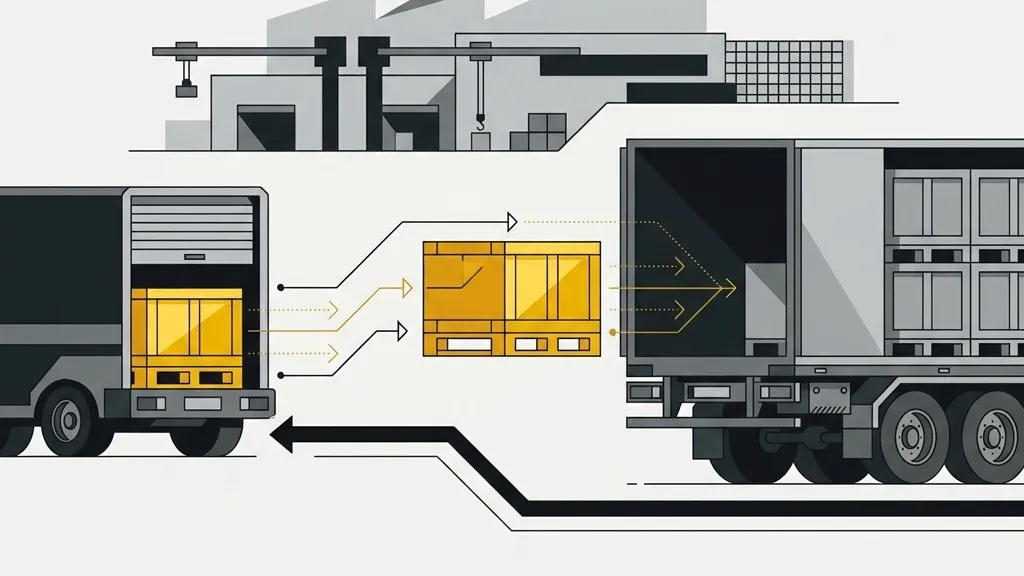
Variant two: the named place is anywhere else — a freight terminal, a consolidation depot, a public warehouse. Here the seller must deliver the goods to that place on their own vehicle and present them ready for unloading. They are not required to unload. Risk passes when the seller’s vehicle arrives at the named place with the goods available — not when the goods have physically left the seller’s vehicle.
The practical consequence is easy to underestimate. A contract reading “FCA Milano terminal” means that risk has already passed the moment the seller’s van arrives at our Milano facility with the consignment on board. The goods are at the buyer’s risk while they are still on the seller’s vehicle, before our staff have moved a single piece onto the terminal floor.
Why precision in naming the place matters
FCA demands a precisely identified place. A contract that reads only “FCA Milano” — without a street address or terminal name — leaves unclear which variant applies, which party bears the loading cost, and exactly when risk transfers. That ambiguity rarely surfaces on a clean shipment. It surfaces when there is a damage claim.
For groupage on the Italy–Türkiye corridor, the working default is to name one of our five Italian terminals — Milano, Vicenza, Torino, Bologna, or Firenze — as the named place. The seller drives their goods to that facility; when their vehicle arrives with the consignment available for unloading, their obligation under FCA is met and the buyer’s exposure begins.
Cost allocation
Under FCA, the cost split tracks the risk transfer closely. This is worth stating because it is the exception, not the rule: under CPT and CIP the seller’s cost obligation extends to the destination while their risk ends at the handover point, creating a gap that is the source of the most common misunderstanding in all of Incoterms. Under FCA there is no such gap.
The seller bears: all costs of bringing the goods to the named place, including packaging and inland transport to that point; export clearance in the country of despatch, comprising the export declaration, any export licence required, and applicable export duties; and security measures required at despatch.
The buyer bears: the main international carriage from the named place onwards; import duties, taxes, and customs clearance formalities at destination; and all costs at the delivery address.
Export clearance: the seller’s responsibility
The seller handles export clearance under FCA. This distinguishes the clause from EXW, where the buyer bears responsibility for the export declaration — an arrangement that creates practical difficulties when the buyer is a foreign entity that cannot lawfully submit an export declaration in the seller’s country. On EU exports, that problem is common: a Turkish importer generally cannot file an EU export declaration.
On EU–Türkiye groupage, the seller is typically established in the EU and can submit the declaration without difficulty. The buyer handles the Turkish side: the customs entry, any applicable duties, and the commodity-specific permits the goods’ tariff code attracts. Our customs brokerage manages that entry on the Turkish border for consignments we carry.
Insurance: no obligation
Neither party is required to insure the goods under FCA. The clause imposes no insurance obligation and specifies no level of cover.
Since the buyer carries the risk from the handover point onwards, it is in their interest to ensure cover is in place before that moment arrives. Incoterms 2020 point to Institute Cargo Clauses (A) — the all-risks level — as a reference for what adequate cover looks like, but this is guidance only, not a contractual requirement. The relevant comparison is CIP, where the seller is required to arrange ICC(A) cover as a matter of contract; that obligation exists under CIP and does not exist under FCA.
Cargo insurance on this corridor is a decision independent of which Incoterms clause governs the sale. The clause establishes who bears the risk; whether that risk is insured is for the party bearing it to arrange.
The letter of credit problem, addressed in 2020
When a transaction involves a documentary credit requiring an on-board bill of lading, FCA created a structural difficulty under the earlier rules. Risk passes at the inland handover point, before the goods are on a vessel, so the seller had no on-board bill of lading to present to the bank.
Incoterms 2020 introduced an explicit mechanism. Buyer and seller may agree that the buyer will instruct their carrier to issue an on-board bill of lading to the seller after loading at the port. That document can then be tendered under the letter of credit. The agreement must be made expressly, in the contract of sale, before the goods move — it does not apply by default, and it must be passed as an instruction to the carrier in advance.
What FCA means for groupage in practice
In groupage freight, your consignment shares a trailer with other shippers’ goods from the consolidation point onwards. Once FCA handover is complete at our terminal, the consignment travels under our manifest and our documentation covers the full vehicle. A problem with the paperwork for any one consignment on that trailer delays every other consignment on it.
The practical implication is straightforward: import documentation — the Turkish customs entry, commodity permits, any applicable preference certificates — should be prepared and confirmed before the vehicle departs, not when it reaches the border. The way we sequence loading at our Italian terminals is set out in our methodology.
The CMR Convention governs carrier liability from the handover point. That liability is capped at 8.33 special drawing rights per kilogram of gross weight. For light, high-value consignments the cap falls well short of the commercial invoice value, and the decision about whether to close that gap rests with the buyer from the moment risk passes. This is the calculation that cargo insurance on this corridor is designed to address.
The information on this page describes the Incoterms® 2020 rules as published by the International Chamber of Commerce and applies them to road groupage between Europe and Türkiye. The appropriate clause for any particular transaction depends on the specifics of that contract, and this page does not constitute binding commercial or legal advice.
Sources
External figures on this page come from the publicly available sources below. They are not our own measurements.
- 01ICC Incoterms® 2020 — Official rules page; confirms FCA as one of seven clauses for any mode of transport, valid from 1 January 20202026
- 02ICC Incoterms® rules — Overview page; confirms the division between multimodal clauses (including FCA) and sea/inland waterway clauses (FOB, CIF, CFR, FAS)2026
- 03ICC Knowledge 2Go — Incoterms® rules (paid publication containing the full FCA text, Articles A1–A10, and the explanatory guidance notes)2020
Updated: 27 July 2026
Frequently asked questions
What does FCA stand for and when does it apply?
FCA stands for Free Carrier. It is one of seven Incoterms 2020 clauses applicable to any mode of transport. The seller delivers goods to a named place, clears them for export, and from that point the buyer bears the cost and risk. It is the standard clause for European road groupage because the sea-transport clauses — FOB, CIF and the rest — define the risk point by reference to a vessel's rail, which does not exist on a lorry.
Exactly when and where does risk pass under FCA?
At the named place, but the precise moment depends on which of two variants applies. If the named place is the seller's premises, risk passes when loading onto the buyer's collecting vehicle is complete. If the named place is a terminal or any other location, risk passes when the seller's vehicle arrives there with the goods available for unloading — before the goods have physically left the seller's vehicle. That distinction matters for any damage claim and for deciding when to ensure cover is in place.
Who handles export clearance under FCA?
The seller. They submit the export declaration, obtain any export licence, and pay any export duties in the country of despatch. This is the practical reason FCA is preferred over EXW on EU exports: the seller is established in the EU and can lawfully submit the formality that a foreign buyer often cannot. Under EXW, the export declaration falls to the buyer — an arrangement that creates legal difficulties in most EU member states.
Is insurance required under FCA?
No. Neither party is obliged to insure the goods. Since the buyer carries the risk from the handover point onwards, it is in their interest to ensure cover is in place before that moment arrives. Incoterms 2020 point to Institute Cargo Clauses (A) as a reference for adequate cover, but that is guidance rather than a contractual requirement. Compare this with CIP, where the seller must arrange ICC(A) cover as a matter of contract — that obligation exists under CIP and does not exist under FCA.
Why use FCA instead of FOB for a road shipment?
FOB is designed for sea and inland waterway transport. The risk point — the ship's rail — has no equivalent on a truck movement, so any allocation built around it is mechanically meaningless. The ICC explicitly notes in its guidance that FOB, CFR and CIF should be replaced by FCA on multimodal or road shipments. In groupage, where the goods will consolidate at a terminal and travel by road to the border, FCA at the terminal is the precise clause; FOB is not.
What changed for FCA in Incoterms 2020?
Incoterms 2020 introduced an explicit mechanism for transactions involving a documentary credit. Under earlier rules, FCA and letters of credit were difficult to reconcile: risk passed at the inland handover point, but banks required an on-board bill of lading — a document the carrier issues only after loading at the port, which may be much later. The 2020 text allows buyer and seller to agree expressly that the buyer will instruct their carrier to issue an on-board bill of lading to the seller after shipment, which can then be presented under the credit. The agreement must be made in writing before the goods move.
Let's talk about your Europe–Türkiye shipment
Send us the shipment details and we will confirm the collection terminal and the expected departure.